
“Speaking of friends, I gained a new one a few months ago when I met my editor, HALOMARI. Not only was she my editor, but she became my companion. I love you for the sake of Allah, and may Allah allow your skills to flourish, Ameen. She was my therapist for writing, and what I loved the most about working with her was that she didn’t change my book, but instead, she enhanced it in exquisite ways. I’ll always be grateful for you guiding me through the pages of this book.”
“HALOMARI did her thing with my edits. I’m in love with them! She understood the assignment and more. She’s an outstanding editor. I highly recommend her. Alhamdulillah.” See more testimonials.
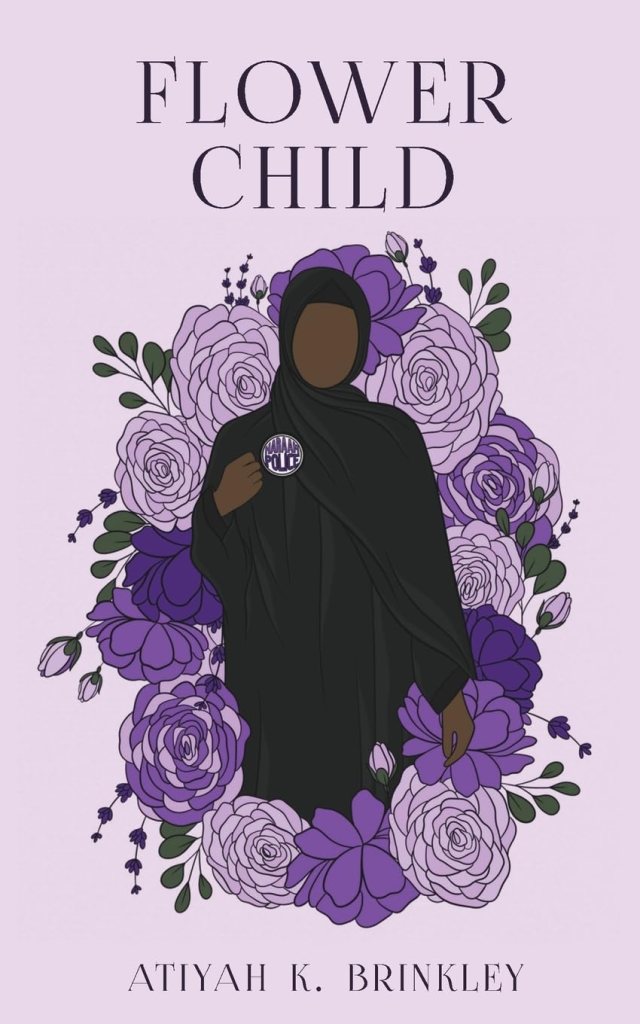
Summary: After losing her father, Aleena’s faith in Islam is tested by depression, bullying, and a boy she never expected to fall for.
Aleena is depressed. Her father is gone, her family has moved on from his death without her, and her freshman year of high school is about to start. Trapped in a spiral of deteriorating mental health and bad habits, Aleena begins to lose the joys she has left—baking and gardening.
When she meets Zayn, a kind-hearted boy who believes she can overcome her pain, Aleena realizes it’s okay to ask for help. But relentless bullying at school threatens to unwind her progress and deepens her despair.
Can Aleena embrace her imperfections to learn that being unapologetically Muslim is a source of strength to heal herself?
Flower Child is a heartwarming coming-of-age story that challenges young Muslim girls to accept their flaws, be strong, and understand their religion.
Review: Okay, okay, I’m biased—I’m the editor of Flower Child. But you should read it and decide for yourself just how much you love it. I was blessed to help bring this story to life and couldn’t be prouder of Atiyah for all her hard work. We need more stories that celebrate halal friendships and love—books that stay true to Islam while empowering young girls to navigate bullying, loss, and romance with strength and faith. Flower Child does exactly that.
I love seeing Muslim sisters already connecting with Aleena, seeing themselves in her struggles. Atiyah wrote this book for them—for our younger selves and for every girl searching for her place in this world.
Working on this book was precious to me, especially the deep developmental edits—rewriting full scenes and chapters to bring the story to life. While some scenes I loved didn’t make it into the final version (and will, hopefully, be in the next book), what remains is still a powerful, heartfelt story that I believe in.
Atiyah added a brilliant touch to the “haraam police” concept, turning it into something positive. She teaches sisters how to speak the truth without watering down Islam for approval. I can’t wait to see how readers respond to these powerful messages.
I poured so much into this book, and like any editor, I always wish for just one more round of edits! But I’m still so proud of the final result and give it five stars. I hope you love it as much as we do.
Get your copy HERE and experience Aleena’s journey for yourself!
Meet Atiyah on Instagram.
Thank you, Atiyah, for your wonderful testimonial.
 Editorial Services