Ditching the Beta Read!

After years of offering free beta reads, I’ve decided to make a shift—one that better reflects both my experience and what authors actually need at a crucial stage in their writing journey.

Starting now, I’ll be offering a paid Editorial Letter service in place of traditional beta reads.

Here’s Why:

Many authors come to me requesting a free beta read, but what they truly needed—whether they realized it or not—is a much deeper level of feedback. To be blunt, most authors reaching out are in need of a full developmental edit—they just don’t want to pay for one. And as with most things, you get what you pay for.

Frequently, they’d also ask for a copy edit or proofreading, when what the manuscript really needed was work at the story level: structure, character arcs, pacing, plot clarity, and world-building.

They weren’t ready for a polish—they needed a thoughtful, professional assessment. And that’s exactly what the Editorial Letter provides.


My Background: Query In-takes

In addition to working with indie authors, I’ve also participated in reviewing author queries as part of the submission process for publication. In this role, I focused on the big picture, looking beyond grammar and sentence structure to assess key elements like:

  • Is the story cohesive?
  • Are the characters emotionally compelling?
  • Does the pacing support the tension?
  • Is the world fully realized and consistent?
  • Are the stakes clear and engaging?
  • Does the story align with the publisher’s guidelines?

When responding to these submissions, I didn’t send a line edit—I sent an editorial letter. This feedback helped authors strengthen their work before moving forward with edits and publication.


Who This Is For:

The Editorial Letter is perfect for you if:

  • You’ve already had developmental edits and want a second opinion
  • You’re not quite ready for a full edit but need direction
  • You’re preparing to publish and want a final assessment beyond surface-level proofreading
  • You want to strengthen your story before querying agents or small presses

What You’ll Get (at a Special Discount)

A manuscript assessment like this typically costs $0.01 per word—the standard industry rate for this level of professional feedback.

However, as a special thank you to the amazing writers I’ve worked with through free beta reads in the past, I’m offering up to 50% off, depending on your manuscript’s word count. This is my way of making high-level editorial feedback more accessible to indie authors who are not yet ready for a full edit. Still unsure of pricing? Let’s negotiate a price point or payment plan that works for you.

What’s included:

✓  A detailed Editorial Letter covering:
– Character development
– Plot and structure
– World-building
– Pacing and scene flow
– Tone, voice, and POV
– Readability and clarity

✓  A 1-hour consultation to walk through the feedback and discuss your next steps

Note: You will not receive an annotated manuscript—this is a high-level critique, not a line or copy edit.


Why Choose the Editorial Letter Over a Beta Read?

In the past, my free beta reads were actually developmental edits. These took up a lot of my time and resources, but I did it to help the authors I believe in. While I’m grateful for the kind words from those who’ve returned again and again, it’s become clear that what authors truly need is more than a simple beta read.

What you need is a professional manuscript assessment that addresses the story’s structure, character arcs, pacing, and plot clarity—not just surface-level feedback. While beta reading has its place, it’s typically useful after your manuscript is polished. If you’re serious about elevating your story, the Editorial Letter offers a deeper, more valuable critique to ensure your manuscript is the best it can be before moving forward in your writing or publishing process.

Whether you need eyes on a first draft, guidance on your next steps, or a final review before you publish, my Editorial Letter offers the clarity and direction to move forward with confidence. It’s honest, actionable, and rooted in a deep understanding of story—not just grammar.

Your manuscript deserves more than a casual read-through. It deserves insight.

Ready to dig deeper and level up your story? Contact me today to get started.

STILL NOT SURE?

I offer a 30 minute free consultation for new clients and a free developmental edit on your first chapter.

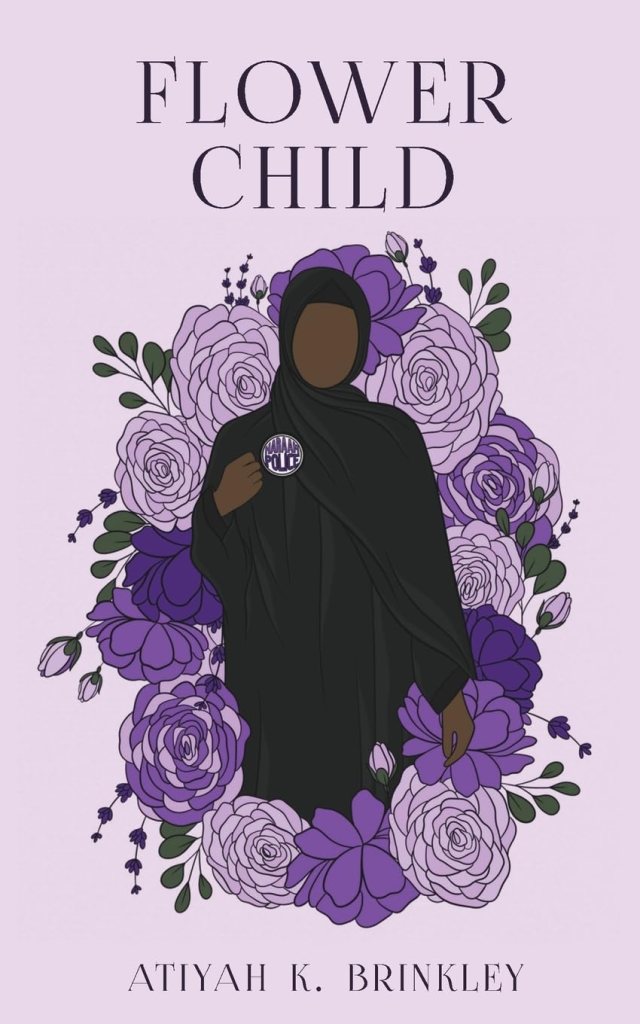
Flower Child by Atiyah Brinkley

“Speaking of friends, I gained a new one a few months ago when I met my editor, HALOMARI. Not only was she my editor, but she became my companion. I love you for the sake of Allah, and may Allah allow your skills to flourish, Ameen. She was my therapist for writing, and what I loved the most about working with her was that she didn’t change my book, but instead, she enhanced it in exquisite ways. I’ll always be grateful for you guiding me through the pages of this book.”

“HALOMARI did her thing with my edits. I’m in love with them! She understood the assignment and more. She’s an outstanding editor. I highly recommend her. Alhamdulillah.” See more testimonials.

Summary: After losing her father, Aleena’s faith in Islam is tested by depression, bullying, and a boy she never expected to fall for.

Aleena is depressed. Her father is gone, her family has moved on from his death without her, and her freshman year of high school is about to start. Trapped in a spiral of deteriorating mental health and bad habits, Aleena begins to lose the joys she has left—baking and gardening.

When she meets Zayn, a kind-hearted boy who believes she can overcome her pain, Aleena realizes it’s okay to ask for help. But relentless bullying at school threatens to unwind her progress and deepens her despair.

Can Aleena embrace her imperfections to learn that being unapologetically Muslim is a source of strength to heal herself?

Flower Child is a heartwarming coming-of-age story that challenges young Muslim girls to accept their flaws, be strong, and understand their religion.

Review: Okay, okay, I’m biased—I’m the editor of Flower Child. But you should read it and decide for yourself just how much you love it. I was blessed to help bring this story to life and couldn’t be prouder of Atiyah for all her hard work. We need more stories that celebrate halal friendships and love—books that stay true to Islam while empowering young girls to navigate bullying, loss, and romance with strength and faith. Flower Child does exactly that.

I love seeing Muslim sisters already connecting with Aleena, seeing themselves in her struggles. Atiyah wrote this book for them—for our younger selves and for every girl searching for her place in this world.

Working on this book was precious to me, especially the deep developmental edits—rewriting full scenes and chapters to bring the story to life. While some scenes I loved didn’t make it into the final version (and will, hopefully, be in the next book), what remains is still a powerful, heartfelt story that I believe in.

Atiyah added a brilliant touch to the “haraam police” concept, turning it into something positive. She teaches sisters how to speak the truth without watering down Islam for approval. I can’t wait to see how readers respond to these powerful messages.

I poured so much into this book, and like any editor, I always wish for just one more round of edits! But I’m still so proud of the final result and give it five stars. I hope you love it as much as we do.

Get your copy HERE and experience Aleena’s journey for yourself!
Meet Atiyah on Instagram.

Thank you, Atiyah, for your wonderful testimonial.

Planning A Novel

Planning or Pantsing? It’s one of the most debated topics in the writing community because some authors swear by “winging it,” while others are perfectionists and meticulous over the writing process. I’m not here to judge the pantsers, but planning a novel helps you structure your story, develop characters, and create an outline of goals that hold you accountable. Whether you’re a newbie or you’ve written novels, planning a book can be daunting, so here are some tips on how to start:

What’s Your Idea?

Inspiration begins with brainstorming techniques such as freewriting, mind mapping, group discussions, role-playing, or people-watching.

Start freewriting by jotting down every thought that comes to your mind without concerning yourself with grammar or spelling; easier said than done for perfectionists, but the more you practice, the easier and quicker the process becomes. Your goal is to write continuously for a set time without censoring yourself or stopping the thought process. Generate new ideas by looping what you’ve written. For example, maybe one sentence, word, or idea sticks out to you most while you’re freewriting. Write that sentence or idea at the top of a new blank page and begin the freewriting process again until you come up with another. Repeat the looping process.

Mind mapping is like creating bubble maps. A map or list helps you organize the information during the brainstorming process. Circle a main thought and web further ideas from its center. This is a great visual aid and allows you to see the relationships between ideas.

Group discussions, role-playing, and people-watching stimulate creativity. Getting feedback from others, using them as inspiration, talking out scenes and dialogue, or observing a person’s behavior can help you accumulate ideas for characters, world-building, and plots.

Your ideas for a novel should excite and motivate you.

Create an Outline

Plot a map of major story events and how they will logically occur, creating a beginning, middle, and end. Start with a summary and central conflict. Who are the main characters and what is the setting? An outline will help you connect the main events, conflicts, and plot twists that affect your characters. You may also consider fleshing out character profiles that include biography, history, motives, traits, and relationships. When deciding on a setting, consider the time period and locations that are most important for world-building. I suggest going ahead and creating a list of sensory details that are important to the setting if you can. Include in your outline: scenes, subplots, and character dialogue.

Point of View

Who is telling the story? Is it one person or multiple characters? Do you want the reader to explore the thoughts and feelings of your characters or do you prefer to distance the reader from them? How do the characters relate to each other? First-person is from the pov of one main character, up close and personal. Third-person steps further away from the character but still focuses on the protagonist. Consider what you want the reader to know about each character. How will each point of view and tone affect them emotionally?

Create a Deadline

You have a plan, now make a schedule! Some authors find this to be most intimidating and too much pressure, while others understand that having a deadline helps them reach their publishing goals. Aim to have several words or pages completed each day or week. This is customizable to mere minutes or hours, depending on your schedule. Stay on track, but don’t be discouraged if you can’t meet each goal. The most important thing is that you keep writing.

Revisions and Editing

Too many newbies jump the gun and throw their manuscripts out to the beta readers before they properly revise. So, how many editing rounds do you need? At least two, in my opinion. Even a beta reader won’t complete a story full of plot holes and inconsistencies. Does your story flow? Are your characters developed enough? Are you missing details, scenes, or dialogue? Have you over or underwritten? Improve the quality of your writing before shipping it off to the betas. My personal recommendation is to do a few editing rounds yourself then one or two betas. Once you’ve revised the book with beta feedback in mind, send it off for a developmental edit. This will help ensure your story structure is solid before it goes off for more betas, copy editing, and proofreading.

Novel outlining will organize your ideas, help you meet deadlines, and make the editing process easier. If you would like more information about each of these steps, would like a consultation to help brainstorm an outline, or if you are in the editing process now and need professional feedback, please don’t hesitate to contact me. I provide multiple options for each step of novel writing and editing with competitive prices that are up for negotiation. Let’s work together to make your book dreams come true! Contact me.