Ditching the Beta Read!

After years of offering free beta reads, I’ve decided to make a shift—one that better reflects both my experience and what authors actually need at a crucial stage in their writing journey.

Starting now, I’ll be offering a paid Editorial Letter service in place of traditional beta reads.

Here’s Why:

Many authors come to me requesting a free beta read, but what they truly needed—whether they realized it or not—is a much deeper level of feedback. To be blunt, most authors reaching out are in need of a full developmental edit—they just don’t want to pay for one. And as with most things, you get what you pay for.

Frequently, they’d also ask for a copy edit or proofreading, when what the manuscript really needed was work at the story level: structure, character arcs, pacing, plot clarity, and world-building.

They weren’t ready for a polish—they needed a thoughtful, professional assessment. And that’s exactly what the Editorial Letter provides.


My Background: Query In-takes

In addition to working with indie authors, I’ve also participated in reviewing author queries as part of the submission process for publication. In this role, I focused on the big picture, looking beyond grammar and sentence structure to assess key elements like:

  • Is the story cohesive?
  • Are the characters emotionally compelling?
  • Does the pacing support the tension?
  • Is the world fully realized and consistent?
  • Are the stakes clear and engaging?
  • Does the story align with the publisher’s guidelines?

When responding to these submissions, I didn’t send a line edit—I sent an editorial letter. This feedback helped authors strengthen their work before moving forward with edits and publication.


Who This Is For:

The Editorial Letter is perfect for you if:

  • You’ve already had developmental edits and want a second opinion
  • You’re not quite ready for a full edit but need direction
  • You’re preparing to publish and want a final assessment beyond surface-level proofreading
  • You want to strengthen your story before querying agents or small presses

What You’ll Get (at a Special Discount)

A manuscript assessment like this typically costs $0.01 per word—the standard industry rate for this level of professional feedback.

However, as a special thank you to the amazing writers I’ve worked with through free beta reads in the past, I’m offering up to 50% off, depending on your manuscript’s word count. This is my way of making high-level editorial feedback more accessible to indie authors who are not yet ready for a full edit. Still unsure of pricing? Let’s negotiate a price point or payment plan that works for you.

What’s included:

✓  A detailed Editorial Letter covering:
– Character development
– Plot and structure
– World-building
– Pacing and scene flow
– Tone, voice, and POV
– Readability and clarity

✓  A 1-hour consultation to walk through the feedback and discuss your next steps

Note: You will not receive an annotated manuscript—this is a high-level critique, not a line or copy edit.


Why Choose the Editorial Letter Over a Beta Read?

In the past, my free beta reads were actually developmental edits. These took up a lot of my time and resources, but I did it to help the authors I believe in. While I’m grateful for the kind words from those who’ve returned again and again, it’s become clear that what authors truly need is more than a simple beta read.

What you need is a professional manuscript assessment that addresses the story’s structure, character arcs, pacing, and plot clarity—not just surface-level feedback. While beta reading has its place, it’s typically useful after your manuscript is polished. If you’re serious about elevating your story, the Editorial Letter offers a deeper, more valuable critique to ensure your manuscript is the best it can be before moving forward in your writing or publishing process.

Whether you need eyes on a first draft, guidance on your next steps, or a final review before you publish, my Editorial Letter offers the clarity and direction to move forward with confidence. It’s honest, actionable, and rooted in a deep understanding of story—not just grammar.

Your manuscript deserves more than a casual read-through. It deserves insight.

Ready to dig deeper and level up your story? Contact me today to get started.

STILL NOT SURE?

I offer a 30 minute free consultation for new clients and a free developmental edit on your first chapter.

Strange Inc.

I’m thrilled to share that I’ve joined Strange Inc. as one of their primary editors! Alhamdulillah. During Ramadan, I had a conversation with Aishah about our shared commitment to supporting Muslim women’s publishing goals—and how I could help Strange Inc. do just that.

This won’t affect my indie editing—I’m still here for all your self-pub and freelance projects.

But if you’re exploring hybrid publishing, Strange Inc. is who I’ll be working with to help bring your book dreams to life!

Read more about Strange Inc. and their mission to empower Muslim women.

“Strange Inc., a New York-based non profit organization, passionately empowers Muslim women writers and creatives. Our journey began with spoken word performances, evolving into publishing books to ensure authentic representation. We’re devoted to amplifying the voices of Muslim women often marginalized in media.”

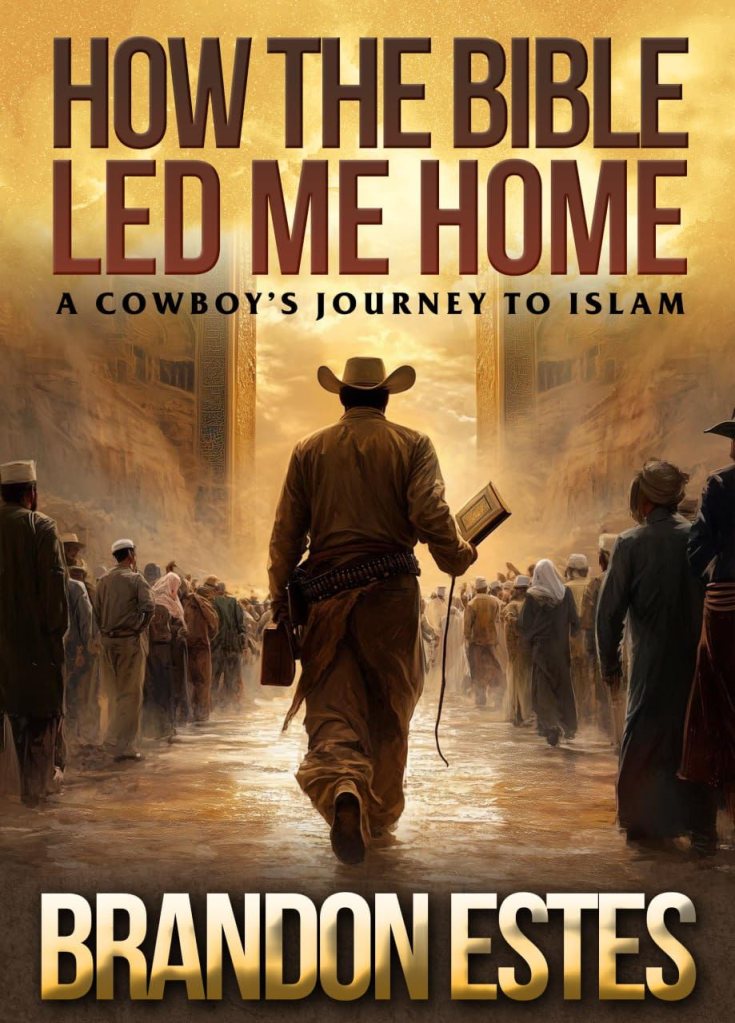
How The Bible Led Me Home by Brandon Estes

“Special thanks is due to HALOMARI, whose exceptional skills in editing and proofreading have been crucial in refining this manuscript. Her meticulous eye for detail and commitment to excellence have significantly elevated the quality of this work.” See more testimonials.

Summary: What if everything I believed about the Bible wasn’t the full truth?

I was born and raised in the heart of the Bible Belt, a man of deep conviction in Christianity. From raising Beefmaster cattle with my grandpa to working in the oilfield, my faith was unwavering. I lived a life rooted in scripture, never questioning what I had been taught. But when I began to truly study the Bible—not just read it, but analyze it—I discovered contradictions, historical inconsistencies, and missing links that shook the very foundation of my beliefs.

What started as an attempt to strengthen my faith became an unstoppable journey of truth-seeking. From the depths of biblical history to the complexities of theology, I dove headfirst into scripture, uncovering hidden realities that many choose to overlook. My relentless pursuit led me beyond doctrine, beyond tradition, and toward something undeniable—The Final Testament.

This book is more than just my story; it is a challenge to every seeker of truth. If you’ve ever wrestled with blind faith, questioned the doctrines you were raised with, or yearned for a deeper understanding of God, How the Bible Led Me Home will shake your soul and inspire you to follow the truth—wherever it may lead.

Dare to question. Dare to seek.


Editor’s Notes – HALOMARI

Brandon once posted a TikTok sharing how he was led to Islam. Around that same time, I was also in the process of reverting, and my husband happened to send me the video. In it, Brandon recounted a story about his pastor, who once told the Sunday congregation never to pray like Muslims—that Christians should never “humiliate” themselves by falling on their faces in prostration, even though that was exactly how Jesus himself prayed.

When I heard this, it struck a deep chord with me and helped solidify my own beliefs—especially as a pastor’s daughter. It perfectly captured what I had been feeling about my faith, the church, and Christ. So when Brandon later reached out for feedback on his manuscript, I jumped at the chance. My husband is always encouraging me to write something similar—to use the Bible in a way that Christians can understand, to explain why I reverted. I was so grateful to be part of Brandon’s editing process. His work resonates deeply with reverts to Islam, especially those of us who grew up in the South.

I encouraged him to turn it into a memoir one day, and I truly hope he does—because the personal moments woven throughout are so emotionally powerful and relatable. For now, the book focuses on analyzing biblical contradictions and answering the questions that Christianity could never quite resolve for those of us seeking clarity. If he does turn it into a memoir, I hope I get another chance to be part of his editing journey.

I highly recommend this book to Christians who feel like something is missing—those who are searching, questioning, and looking for something more. Brandon makes it clear that he isn’t trying to make you abandon Christ or turn away from God—just the opposite. His goal is to bring you even closer, by addressing the questions that Christianity often struggles to answer with reason and consistency.

Thank you, Brandon, for your kind testimonial and for letting me be part of something so meaningful.

Get your copy here! Meet Brandon on Instagram & X

To: My Younger Self

I sit across from her, my younger self, in a small coffee shop near the train tracks downtown. Outside, leaves flutter, crunching under the boots of passerbys. It’s our favorite season–fall.

She’s crouched over, arms drawn in, already uncomfortable in her own skin. She wears tight jeans and an oversized sweater, her brown hair falling over her shoulders. I sit straight in hijab, wrapped in a loose, flowing dress—the confident version of herself we never imagined.

She is full of dreams, searching for adventure, unaware of Islam. A pastor’s daughter, artistic, always on the lookout for her prince. I know what’s coming—the rebellion, the longing, the ache for something more.

The table rattles with a passing train and I wonder if telling her about the Quran will change her, or if she will turn away in her young age. Will her journey still lead her to my husband? Or will the hardships ahead shape her path as they once shaped mine?

She watches me with curious eyes.

“Wait for him,” I say. “Don’t be fooled by others. Trust Allah’s timing.”

She asks more about my husband. Of course, it’s all she thinks about–finding him. If she only knew how perfect he was…

“He’s my truth-teller,” I say, smiling. “Righteous, protective, and real. He’s everything–my soul.”

I tell her about Palestine, about our struggles, about the weight of truth while the world is asleep. She needs to know now, so she can see through the lies she is being taught–the ones that will lead to regret, to rage.

Islam is the only way to find peace in a world of illusions. It holds the answers she is desperate for.

I hand her the Quran.

“Everything you’re searching for is already written. So read,” I say. “You’ll love this life more than anything you have every known. Nothing and no one is worth losing it over.”

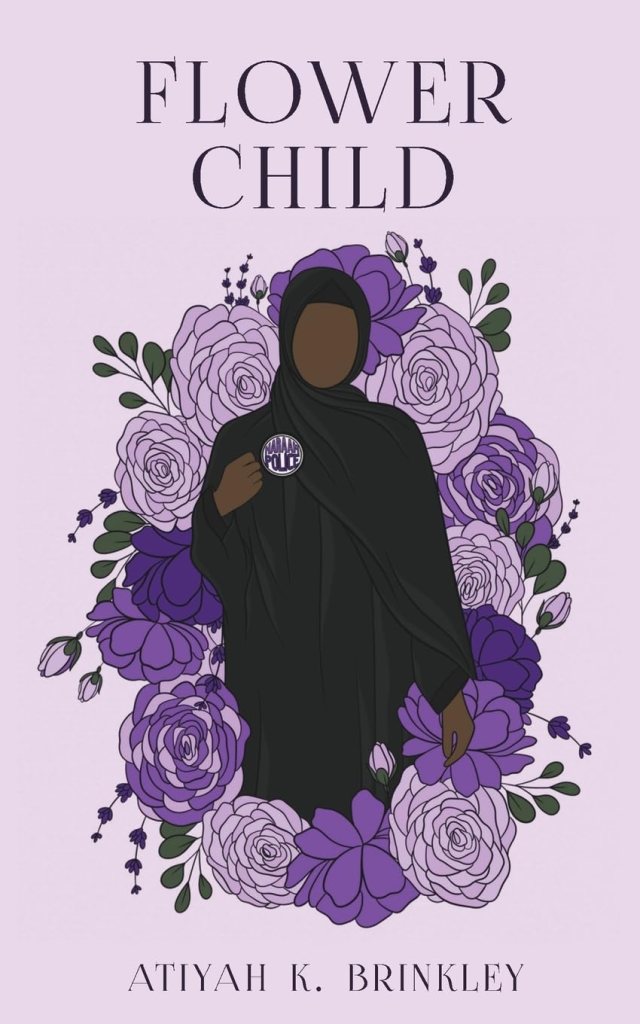
Flower Child by Atiyah Brinkley

“Speaking of friends, I gained a new one a few months ago when I met my editor, HALOMARI. Not only was she my editor, but she became my companion. I love you for the sake of Allah, and may Allah allow your skills to flourish, Ameen. She was my therapist for writing, and what I loved the most about working with her was that she didn’t change my book, but instead, she enhanced it in exquisite ways. I’ll always be grateful for you guiding me through the pages of this book.”

“HALOMARI did her thing with my edits. I’m in love with them! She understood the assignment and more. She’s an outstanding editor. I highly recommend her. Alhamdulillah.” See more testimonials.

Summary: After losing her father, Aleena’s faith in Islam is tested by depression, bullying, and a boy she never expected to fall for.

Aleena is depressed. Her father is gone, her family has moved on from his death without her, and her freshman year of high school is about to start. Trapped in a spiral of deteriorating mental health and bad habits, Aleena begins to lose the joys she has left—baking and gardening.

When she meets Zayn, a kind-hearted boy who believes she can overcome her pain, Aleena realizes it’s okay to ask for help. But relentless bullying at school threatens to unwind her progress and deepens her despair.

Can Aleena embrace her imperfections to learn that being unapologetically Muslim is a source of strength to heal herself?

Flower Child is a heartwarming coming-of-age story that challenges young Muslim girls to accept their flaws, be strong, and understand their religion.

Review: Okay, okay, I’m biased—I’m the editor of Flower Child. But you should read it and decide for yourself just how much you love it. I was blessed to help bring this story to life and couldn’t be prouder of Atiyah for all her hard work. We need more stories that celebrate halal friendships and love—books that stay true to Islam while empowering young girls to navigate bullying, loss, and romance with strength and faith. Flower Child does exactly that.

I love seeing Muslim sisters already connecting with Aleena, seeing themselves in her struggles. Atiyah wrote this book for them—for our younger selves and for every girl searching for her place in this world.

Working on this book was precious to me, especially the deep developmental edits—rewriting full scenes and chapters to bring the story to life. While some scenes I loved didn’t make it into the final version (and will, hopefully, be in the next book), what remains is still a powerful, heartfelt story that I believe in.

Atiyah added a brilliant touch to the “haraam police” concept, turning it into something positive. She teaches sisters how to speak the truth without watering down Islam for approval. I can’t wait to see how readers respond to these powerful messages.

I poured so much into this book, and like any editor, I always wish for just one more round of edits! But I’m still so proud of the final result and give it five stars. I hope you love it as much as we do.

Get your copy HERE and experience Aleena’s journey for yourself!
Meet Atiyah on Instagram.

Thank you, Atiyah, for your wonderful testimonial.

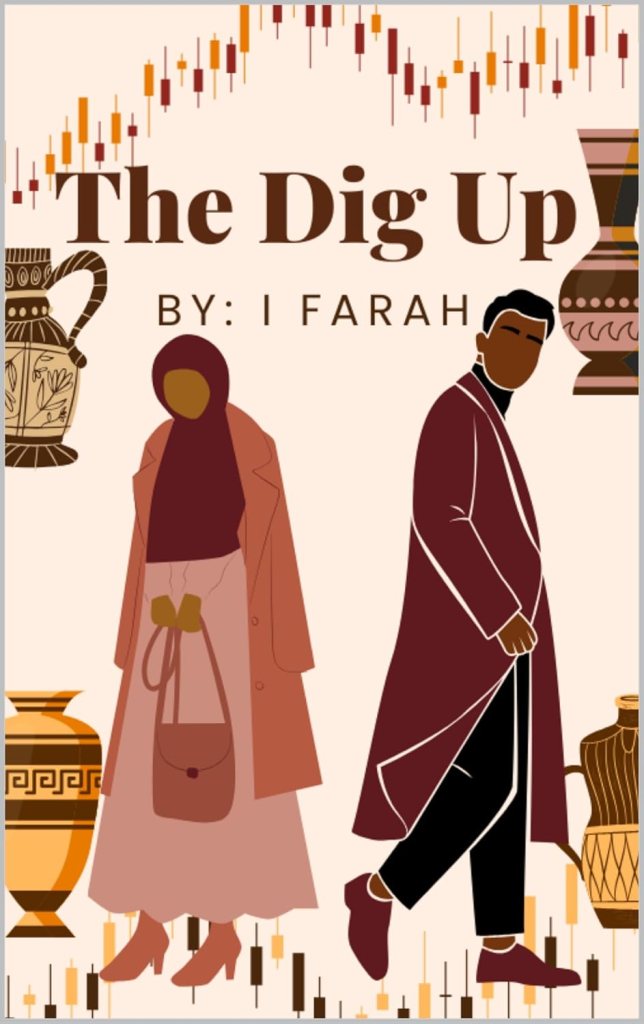
The Dig Up By I Farah

Rating: 4/5 stars
Summary: Mulki is a dedicated Ph.D. candidate and aspiring archeologist, whose deepest ambition is to honor her late father’s legacy by uncovering and sharing the richness of Somali culture through her work. Pious, traditional, and focused on her academic pursuits, Mulki has no immediate plans for marriage–until fate has other ideas.

Enter Bashe, a confident and successful investment banker who appears to have it all, except when it comes to matters of the heart. When circumstances lead him to seek Mulki’s hand, he finds himself unexpectedly drawn to her in ways he couldn’t predict. For a man accustomed to navigating financial markets, Bashe is caught off guard by the intensity of his feelings for Mulki.

Review: The Dig Up is a charming romance novel brimming with cultural richness, family tension, and the complexities of love. Set against the vibrant backdrop of Somali culture in Toronto, the story follows Mulki and Bashe, whose unexpected love blossoms in the midst of personal growth and cultural expectations. Mulki’s character, with her passion for archaeology, adds a refreshing layer to the narrative, blending her academic aspirations with her romantic journey.

The novel shines in its portrayal of dramatic family and relationship dynamics, bringing depth and relatability to the story. The tension between Mulki’s professional dreams and her budding relationship with Bashe keeps the reader engaged. However, much of the story focuses on Bashe’s perspective and emotional struggles, and this sometimes overshadows Mulki’s voice. I found myself wanting more insight into her feelings, particularly toward Bashe, until her emotions became clearer near the book’s conclusion.

One area where the book could improve is in its depiction of Somali culture. While cultural aspects and language are present, adding more sensory details would have made it more vivid and immersive. Additionally, the subplot involving Doctor Cornwell, Mulki’s missing teacher, felt underdeveloped. The mystery surrounding him was introduced abruptly in the opening chapter of info-dump and then largely forgotten until it resurfaced near the end.

Bashe’s character undergoes significant development (almost too quickly), especially in comparison to Omar, a more straightforward “player” character. I was glad to see him reject the faux life he thought he wanted and accept the true love he actually needed. The author addresses the concept of romance thoughtfully, navigating Bashe’s past and his journey with Mulki with care. Despite their relationship feeling rushed at times, the emotional roller coaster between the characters was gripping and led to a satisfying conclusion.

While The Dig Up could benefit from further editing, especially in terms of proofreading and balancing character perspectives, its engaging storyline, strong cultural elements, and emotional depth kept me turning the pages. I look forward to seeing the author’s growth in future works, as the potential here is undeniable.

Find on Amazon.

Fiction Novel Outline

Outlining guides the writing process and ensures a cohesive plot by helping authors organize their ideas in a smooth sequence. The following is a basic novel outline that applies to multiple genres.

Introduction:

  • Hook the reader with a description, dialogue, or event. The opening chapter should intrigue the reader, and raise questions or conflict while invoking relatable emotion. Create a sense of urgency, mystery, or problem the protagonist faces.
  • Set the scene with a unique tone and mood. Include vivid descriptions of the setting and sensory details, giving the reader a clear picture of the time, weather, place, or environment. Show how the environment influences the story with cause and effect, weaving the setting into the action with specific imagery. Include relevant historical or cultural elements.
  • Introduce the protagonist’s goals, desires, struggles, personality, and internal monologue.

Inciting Incident:

  • Set the story in motion with a triggering event that disrupts the character’s normal life. Give the character a reason to act, pushing them toward their literal or emotional journey.
  • What are the new challenges and goals the character must address? Keep raising the stakes until the story’s climax resolves the character’s problem.

Rising Action:

  • Raise the stakes higher as complications arise
  • Introduce secondary characters, allies, and enemies.
  • Develop subplots that intersect with the main plot.

Midpoint:

  • The midpoint redefines the direction of the story. A plot twist or dramatic event changes the protagonist’s approach to conflict. New information is usually revealed, intensifying or shifting the character’s goals. Their beliefs and strategies are challenged, forcing developmental growth.

Second Turning Point:

  • Something forces the protagonist to confront their fears or desires, driving them closer to the climax of the story. Magnify the consequences of the character’s choices.

Climax:

  • The climax is the peak point of tension and conflict. The protagonist faces their main challenge emotionally or physically.

Falling Action:

  • Events that follow the climax resolve the conflict, tying up loose ends. This is the aftermath of the character’s actions and decisions, the consequences of the climax.

Resolution:

  • Satisfy the reader by concluding the story. Include reflection, address any remaining subplots, and show the protagonist’s new status quo. It should be clear by now how the events in the novel changed the character and their world.

Outlines are not set in stone. Revisit and revise your outline as your story develops. Share your outline with me today and I’ll provide insight on plot holes and inconsistencies. If you need help constructing an outline, I offer video or email/chat consultations.

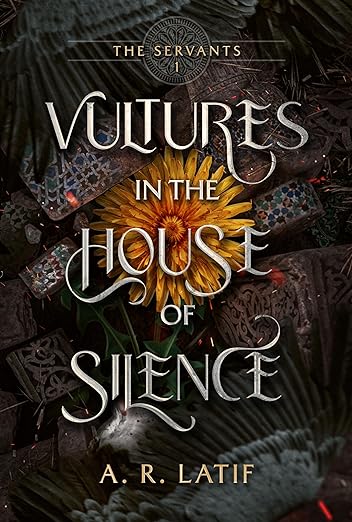
Vultures in the House of Silence by A.R.Latif

Rating 5/5 stars
Summary:
A blend of Persian epics and Shonen Manga, ‘The Witcher meets Avatar: The Last Airbender’ in Medieval Baghdad. The story follows Khurafa, a young gardener grappling with the aftermath of the Mongol invasion. Convinced that the Servants, an ancient group of sorcerers, seek world domination, Khurafa, along with his mentor Shaykh Nariman and the perceptive Zakiyya, embarks on a quest for saintly aid amidst a world filled with monsters.

Review: I was given this book for free in exchange for an honest review and finished half of it in a day because I couldn’t put it down! It’s a fast-paced, dark fantasy with dystopian vibes, drawing heavily upon Sufism and other historic, Islamic themes. “Vultures in the House of Silence” is an easy read and packed with beautifully crafted prose that blooms throughout.

The banter between characters often had me bursting into laughter and the plot twists had me on the edge of my seat! There were turns in this book I did not see coming, especially in the beginning when Khurafa realized that everything he thought he knew about his companion and mentor, Shaykh Nariman, was wrong. Zakiyya’s mind-reading adds a layer of humor and insight with each turn of the page, and just when I thought things couldn’t get darker, they did. The relentless conflicts, the enchanted book, Jinn, and encounters with monsters interwoven with the characters’ search for saints and holy relics kept me captivated and fully invested.

“Vultures in the House of Silence” is part of a series, concluding with a satisfying sense of closure and anticipation of more to come. I highly recommend it and look forward to reading the next book.

Find this book on Amazon and Goodreads

As Long As The Lemon Trees Grow

Rating: 5/5 stars
Summary: Amidst war-torn Syria, Salama Kassab is a pharmacy student who volunteers as a self-taught surgeon at her local hospital in Homs. She tends to the wounded and is desperate to save the dying. Tortured by guilt and PTSD, Salama struggles to decide whether or not to leave Syria. Her PTSD manifests as a hallucination named Khawf, who haunts her, urging her to choose life over her loyalty to Syria. Fated to meet a boy named Kenan, Salama finally makes a choice and accepts the reality of war for what it is: revolution. 

Review: Zoulfa Katouh rips your heart to shreds with nightmarish realities of war conflict and the fight for freedom. I knew what to expect and was still unprepared for how devastating parts of this story were. I am so impressed with the way Salama’s character changed from beginning to end.

Salama’s PTSD through Khawf was such an accurate way of showing cycles of grief, anxiety, and fear. Having gone through PTSD myself, this was very relatable. The hallucinations, especially the revelation toward the end of the book that absolutely threw me for a loop, added depth to Salama’s depressive, emotional spirals. 

Sharing her pain with Kenan was a sweet relief and I loved how he helped her see the “colors,” as well as the revolution itself. Their romance was a mercy and peace as they struggled through tear-jerking horrors. 

I loved this book and everyone should read it–prepare to weep. Everyone should know the truth. The pain of revolution is palpable, lingering forever in the words of a Syrian child before he died, “I will tell God everything.”

Click to find it on Amazon & Goodreads.

Planning A Novel

Planning or Pantsing? It’s one of the most debated topics in the writing community because some authors swear by “winging it,” while others are perfectionists and meticulous over the writing process. I’m not here to judge the pantsers, but planning a novel helps you structure your story, develop characters, and create an outline of goals that hold you accountable. Whether you’re a newbie or you’ve written novels, planning a book can be daunting, so here are some tips on how to start:

What’s Your Idea?

Inspiration begins with brainstorming techniques such as freewriting, mind mapping, group discussions, role-playing, or people-watching.

Start freewriting by jotting down every thought that comes to your mind without concerning yourself with grammar or spelling; easier said than done for perfectionists, but the more you practice, the easier and quicker the process becomes. Your goal is to write continuously for a set time without censoring yourself or stopping the thought process. Generate new ideas by looping what you’ve written. For example, maybe one sentence, word, or idea sticks out to you most while you’re freewriting. Write that sentence or idea at the top of a new blank page and begin the freewriting process again until you come up with another. Repeat the looping process.

Mind mapping is like creating bubble maps. A map or list helps you organize the information during the brainstorming process. Circle a main thought and web further ideas from its center. This is a great visual aid and allows you to see the relationships between ideas.

Group discussions, role-playing, and people-watching stimulate creativity. Getting feedback from others, using them as inspiration, talking out scenes and dialogue, or observing a person’s behavior can help you accumulate ideas for characters, world-building, and plots.

Your ideas for a novel should excite and motivate you.

Create an Outline

Plot a map of major story events and how they will logically occur, creating a beginning, middle, and end. Start with a summary and central conflict. Who are the main characters and what is the setting? An outline will help you connect the main events, conflicts, and plot twists that affect your characters. You may also consider fleshing out character profiles that include biography, history, motives, traits, and relationships. When deciding on a setting, consider the time period and locations that are most important for world-building. I suggest going ahead and creating a list of sensory details that are important to the setting if you can. Include in your outline: scenes, subplots, and character dialogue.

Point of View

Who is telling the story? Is it one person or multiple characters? Do you want the reader to explore the thoughts and feelings of your characters or do you prefer to distance the reader from them? How do the characters relate to each other? First-person is from the pov of one main character, up close and personal. Third-person steps further away from the character but still focuses on the protagonist. Consider what you want the reader to know about each character. How will each point of view and tone affect them emotionally?

Create a Deadline

You have a plan, now make a schedule! Some authors find this to be most intimidating and too much pressure, while others understand that having a deadline helps them reach their publishing goals. Aim to have several words or pages completed each day or week. This is customizable to mere minutes or hours, depending on your schedule. Stay on track, but don’t be discouraged if you can’t meet each goal. The most important thing is that you keep writing.

Revisions and Editing

Too many newbies jump the gun and throw their manuscripts out to the beta readers before they properly revise. So, how many editing rounds do you need? At least two, in my opinion. Even a beta reader won’t complete a story full of plot holes and inconsistencies. Does your story flow? Are your characters developed enough? Are you missing details, scenes, or dialogue? Have you over or underwritten? Improve the quality of your writing before shipping it off to the betas. My personal recommendation is to do a few editing rounds yourself then one or two betas. Once you’ve revised the book with beta feedback in mind, send it off for a developmental edit. This will help ensure your story structure is solid before it goes off for more betas, copy editing, and proofreading.

Novel outlining will organize your ideas, help you meet deadlines, and make the editing process easier. If you would like more information about each of these steps, would like a consultation to help brainstorm an outline, or if you are in the editing process now and need professional feedback, please don’t hesitate to contact me. I provide multiple options for each step of novel writing and editing with competitive prices that are up for negotiation. Let’s work together to make your book dreams come true! Contact me.